
Crispy English Roast Potatoes for the Perfect Sunday Roast
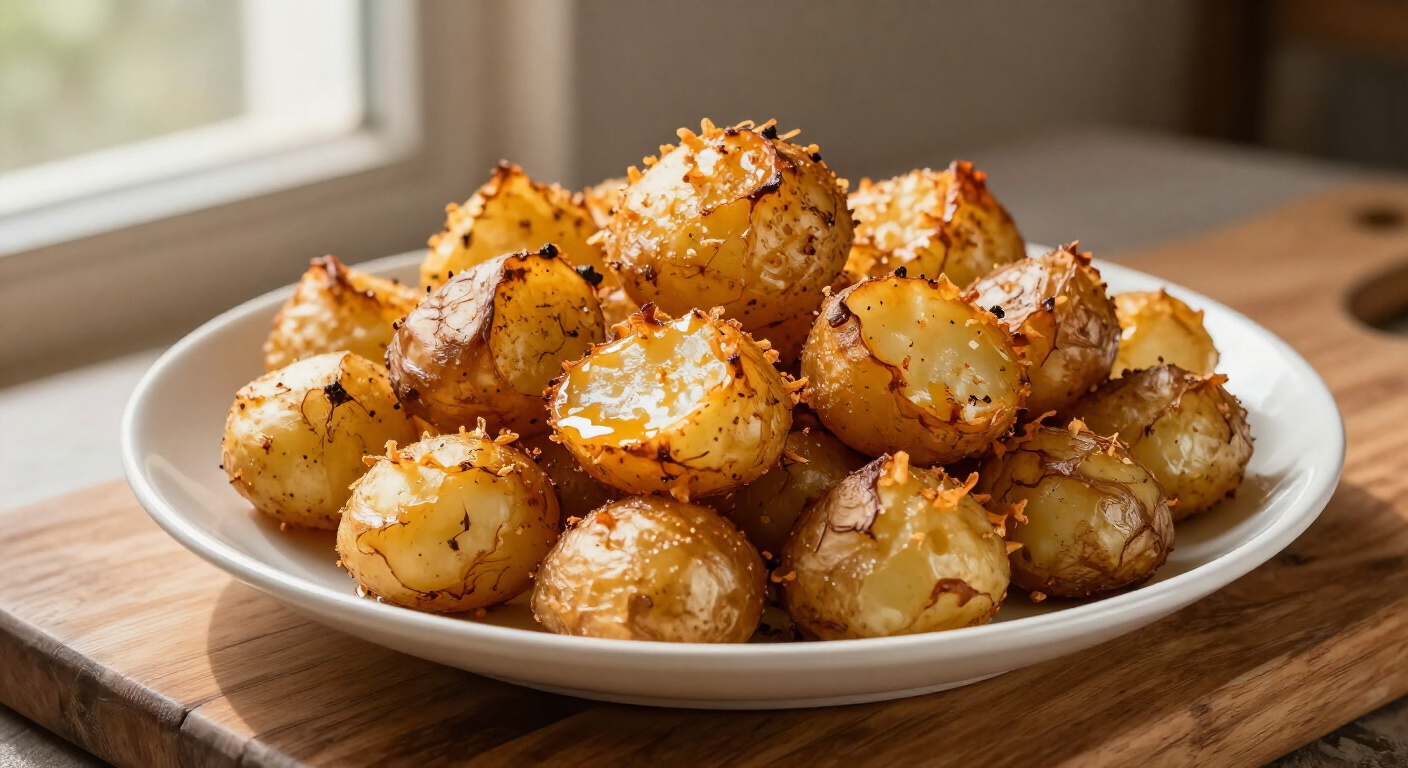
English roast potatoes with shatteringly crisp edges and fluffy centres, ready in 80 minutes. Try this Sunday roast favourite today.
Few smells beat english roast potatoes crackling in hot fat, their edges golden-brown and shattering under your fork. Eighty minutes from peel to plate gets you crisp, fluffy centres and a crunch that holds right up to the gravy. They're my go-to for a lazy Sunday lunch or a crowded Christmas table, and they wait patiently for latecomers.
Keep the goose fat screaming hot in the tin, because potatoes hitting sizzling fat crisp up far faster than those sitting in lukewarm oil.
Ingredients You'll Need
Floury potatoes (Maris Piper or King Edward): These are the heart of the dish. Their dry, fluffy starch breaks down at the edges, giving you that crunchy golden shell and a soft, creamy centre. Russet potatoes work well if you can't find these, but avoid waxy salad potatoes, which stay firm and won't fluff.
Goose fat: Goose fat is rendered fat with a clean, savoury flavour and a high heat tolerance. It sizzles around each parboiled chunk and gives the outside its shattering crackle. Duck fat gives almost the same result, and sunflower oil works if that's all you have, though the flavour will be lighter.
Fine sea salt: This goes into the parboiling water, so every chunk gets seasoned as it softens. Little pinches on the finished potatoes would never reach the centre, which is why it matters here. Fine table salt works well, but use slightly less, since it packs more salt into each spoonful.


How to Make It (Step by Step)
Chunks of floury potatoes are parboiled in salted water, fluffed dry, then roasted in sizzling goose fat until deep golden. Think of it as two simple stages, boil first and roast second, with those fluffy edges doing the crisping for you.

- Melt the goose fat in a large metal roasting tin in the oven until it turns clear and shimmers, 10-15 minutes at 425°F / 220°C. Keep the tin in the oven while you cook the potatoes.

- Bring a large pan of water with 1 tablespoon fine sea salt to a rolling boil, 5-7 minutes at 212°F / 100°C. Wait until big bubbles break across the whole surface.

- Add the potato chunks to the boiling water and parboil until the edges look soft and slightly ragged, 8-10 minutes at 212°F / 100°C. Those rough edges are what turn crisp later.

- Drain the potatoes in a colander and shake them gently until the edges look fluffy and dry, 1-2 minutes at room temperature (68°F / 20°C). Don't rush this bit.

- Tip the fluffed potatoes into the hot goose fat and turn them until every piece is glossy, 1-2 minutes at 425°F / 220°C. Work quickly so the fat stays hot.

- Roast the potatoes, turning them once halfway, until deep golden-brown and crackling all over, 60-75 minutes at 425°F / 220°C. Listen for a crisp sizzle when you turn them.

- Lift the potatoes onto a warm plate with a slotted spoon and rest them until the edges stay crisp when pressed, 2-3 minutes at room temperature (68°F / 20°C). Serve straight away while they crackle.

Recipe Notes
• Storage: Keep leftovers in an airtight container in the fridge for up to 2 days. They don't freeze well, so reheat in a 220°C oven for 10-15 minutes until crisp again.
• Key substitution: No goose fat? Beef dripping is my favourite swap. It adds a deeply savoury flavour and crisps up beautifully.
• Make-ahead tip: Parboil and fluff the potatoes up to a day ahead. Cool them, cover them, and refrigerate until you're ready to roast.
• Common mistake: Crowding the tin is the big one. Packed potatoes steam instead of crisp, so use two tins if your tin is small.
Serving size: 1 portion · Calories: 280 · Total Fat: 14g · Saturated Fat: 6g · Carbs: 36g · Fiber: 3g · Sugar: 2g · Protein: 4g · Sodium: 310mg
Tips and Tricks
- Equipment: Use a large metal roasting tin: Metal heats fast and evenly, so the goose fat sizzles the moment the potatoes land. Preheat the tin in the oven with the fat so it's ready.

- Temperature precision: Hold the oven at 425°F / 220°C: Potatoes need that blast of heat to crisp. Let the temperature drop and the fat cools, so the potatoes steam instead of crackle.
- Common mistake: Fussing with the potatoes too often: Each flip breaks the crust before it sets. Turn them just once, halfway through, then leave them alone to crackle.
- Flavour upgrade: Toss in a few rosemary sprigs: Add a few fresh rosemary sprigs to the hot fat with the potatoes. The piney, herby note pairs beautifully with the goose fat. It's optional, so skip it if you prefer plain.
- Texture tip: Shake the drained potatoes until the edges look fluffy: Give the colander a gentle shake for a minute or two. Those roughened, fluffy edges catch the hot fat and turn into the crispiest crunch.

Frequently Asked Questions
Can I use olive oil or vegetable oil instead of goose fat, and how much should I use?
Yes, use 100 g of sunflower oil or rapeseed oil for the same quantity, or 100 g of duck fat for a richer flavour. Olive oil works too, but its lower smoke point means it can taste bitter at 220°C, so sunflower oil is the safer choice.
Can I freeze parboiled potatoes before roasting them for later?
Yes, spread parboiled and fluffed chunks on a tray until solid, then bag them for up to 1 month. Don't thaw them; roast straight from frozen in hot fat at 220°C, adding about 15 minutes to the usual cook time.
Why do my roast potatoes stick to the tin instead of lifting off cleanly?
The fat was probably not hot enough when the potatoes went in, so they fused to the metal. Leave them undisturbed for the first 30 minutes, and they should release easily once golden.
What to Serve With This
- Creamy Cauliflower Cheese: Its silky, bubbling sauce gives every crunchy potato a soft, velvety partner on the plate.
- Braised Red Cabbage with Apple: Sweet-sharp and tangy, it cuts through the richness of the goose fat for a bright bite.
- Lemon and Garlic Green Beans: Zesty and snappy, they add fresh green lift to a heavy Sunday plate.
- Buttery Parsnip Purée: Smooth and mellow with a gentle sweetness, it soothes the crackle and makes every mouthful feel comforting.

Crispy English Roast Potatoes for the Perfect Sunday Roast
Side Dish / British
- Prep
- 20 min
- Cook
- 1 h
- Total
- 1 h 20 min
- Servings
- 6
- Calories
- 280 kcal
Ingredients
- 1.5 kg floury potatoes, such as Maris Piper or King Edward, peeled and cut into large chunks
- 100 g goose fat (or duck fat or sunflower oil)
- 1 tablespoon fine sea salt, for the parboiling water
Instructions
- Melt the goose fat in a large metal roasting tin in the oven until it turns clear and shimmers, 10-15 minutes at 425°F / 220°C. Keep the tin in the oven while you cook the potatoes.
- Bring a large pan of water with 1 tablespoon fine sea salt to a rolling boil, 5-7 minutes at 212°F / 100°C. Wait until big bubbles break across the whole surface.
- Add the potato chunks to the boiling water and parboil until the edges look soft and slightly ragged, 8-10 minutes at 212°F / 100°C. Those rough edges are what turn crisp later.
- Drain the potatoes in a colander and shake them gently until the edges look fluffy and dry, 1-2 minutes at room temperature (68°F / 20°C). Don't rush this bit.
- Tip the fluffed potatoes into the hot goose fat and turn them until every piece is glossy, 1-2 minutes at 425°F / 220°C. Work quickly so the fat stays hot.
- Roast the potatoes, turning them once halfway, until deep golden-brown and crackling all over, 60-75 minutes at 425°F / 220°C. Listen for a crisp sizzle when you turn them.
- Lift the potatoes onto a warm plate with a slotted spoon and rest them until the edges stay crisp when pressed, 2-3 minutes at room temperature (68°F / 20°C). Serve straight away while they crackle.
Share this article
About the author

Lorraine Beckett
Lorraine's mother never wrote anything down, and when she passed, thirty years of Sunday dinners almost went with her. Lorraine spent a whole winter crying over a pot of greens until she got them right. Every side dish here is a piece of that woman, saved before it could be lost.