How to Cook Polenta: Creamy Golden Cornmeal Polenta Recipe
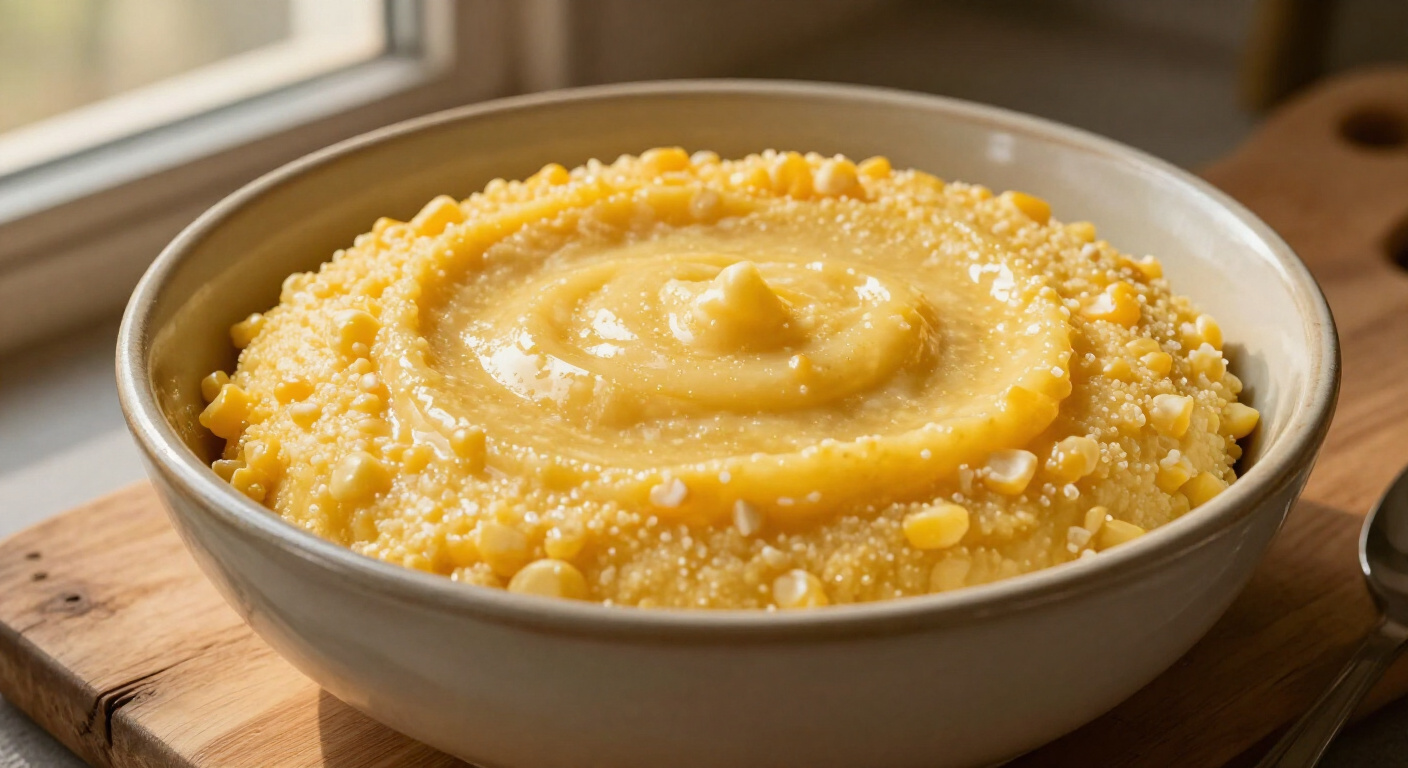
How to cook polenta from yellow cornmeal in 50 minutes: Mama's slow-pour method for a velvety, lump-free golden pot, plus a quick version. Try it tonight.
Learning how to cook polenta takes 50 minutes for a velvety, golden pot that smells of sweet corn. Mama's slow-pour, no-lump method makes it perfect for cozy Sunday suppers or easy weeknights.
A heavy-bottomed pot and low, patient heat let every cornmeal grain swell slowly, so your polenta turns tender and creamy instead of gritty, gluey or scorched on the bottom.
Ingredients You'll Need
Cold Water: Plain cold water is the backbone of this pot, and you'll use 8 cups plus a ½-cup splash to loosen at the end. Starting cold and bringing it to a rolling boil gives the cornmeal clean, even heat to swell into. Swap in chicken or vegetable stock for a savory pot, or use half whole milk for an extra-creamy finish.
Yellow Cornmeal: This is ground dried corn, and it's the whole heart of your polenta. Coarse or medium grind cooks into a hearty, golden pot with a gentle bite. Fine grind is your shortcut for the quick method, ready in 10 to 15 minutes. White cornmeal works in a pinch, though the flavor turns milder and the color paler.
Kosher Salt: Kosher salt has big, flaky crystals that dissolve cleanly and are easy to pinch by hand. Salting the water early seasons every grain from the inside out. A final pinch at the end makes that sweet corn flavor sing. Fine sea salt works too, but start with about half as much, since it's saltier by volume.


How to Make It (Step by Step)
This all happens in one heavy pot: boil salted water, whisk in the cornmeal slowly, then stir it low and patient until it's velvety and golden.
Even if you've never stirred a pot of polenta before, you'll get a creamy, lump-free bowl on your very first try.

- Bring the cold water and 2 teaspoons kosher salt to a rolling boil in a deep, heavy-bottomed pot, 8-10 minutes at high heat (212°F / 100°C). You want big, lively bubbles breaking across the whole surface. A heavy pot spreads heat evenly and keeps scorching away.

- Drop the heat to medium and pour in the yellow cornmeal in a slow, thin stream, whisking constantly. Keep going for 2-3 minutes at a steady simmer (200°F / 93°C). Stop when the mixture is smooth and lump-free, like thin golden soup. That slow pour is my mama's secret against lumps.

- Keep whisking until the polenta thickens to a loose porridge, 3-5 minutes at a gentle simmer (195°F / 90°C). You'll see slow, lazy bubbles plopping on the surface. Your whisk will start leaving soft trails behind it.

- Turn the heat to low and swap to a wooden spoon. Stir every 5-10 minutes, scraping the bottom and corners, for 30-35 minutes at low heat (185°F / 85°C). It's ready when the grains taste tender and the polenta pulls cleanly from the pot's sides. Using fine grind for the quick method? It's done in 10-15 minutes.

- Loosen the polenta with splashes of the extra ½ cup water, stirring for 1-2 minutes at low heat (185°F / 85°C). Add only what you need. Stop when it's creamy, velvety and slowly drips off the spoon in a glossy ribbon.

- Taste and stir in more kosher salt a pinch at a time, about 1 minute at low heat (185°F / 85°C). Keep going until the corn flavor tastes sweet and bright. Bland polenta is just a seasoning problem, honey.

- Take the pot off the heat and let it rest 2-3 minutes, until it cools to about 170°F / 77°C. Spoon it into a warm bowl. It should hold a soft, glossy mound that slowly settles.

Polenta keeps four days chilled and firms up, so make it ahead and rewarm with warm broth, whisking until velvety. Stone-ground white grits swap in beautifully if your pantry's out of yellow cornmeal.
Serving size: 1 portion · Calories: 240 · Total Fat: 2g · Saturated Fat: 0.3g · Carbs: 50g · Fiber: 5g · Sugar: 1g · Protein: 5g · Sodium: 590mg
Tips and Tricks
- Equipment: Use a deep, heavy-bottomed pot: A thick base spreads heat evenly, so the bottom won't scorch during the long simmer. Start with a whisk for lump-free mixing. Then switch to a sturdy wooden spoon that scrapes every corner.

- Temperature precision: Hold a low, lazy 185°F: Once the polenta thickens, keep it around 185°F (85°C). You want slow bubbles plopping now and then, not a fierce boil. Too hot, and it spits, sticks and scorches fast.
- Common mistake: Calling it done because it looks thick: Polenta thickens long before the grains soften. Taste a spoonful before you stop. If it still feels sandy on your tongue, keep stirring. It's ready when it's tender and pulls cleanly from the pot's sides.
- Flavour upgrade: Finish with a pat of butter: Stir in a little butter right after you take the pot off the heat. It melts into a rich, glossy sheen. The sweet corn flavor tastes rounder and even more comforting.
- Texture tip: Loosen it to a slow, glossy ribbon: For the creamiest polenta, add the extra water in small splashes. Stir after each one until it turns velvety. Stop when it drips off the spoon in a thick, shiny ribbon.

Frequently Asked Questions
Is this polenta gluten-free and dairy-free, and how can I make it richer?
Yes, it's naturally both, honey, but buy cornmeal labeled certified gluten-free to avoid cross-contamination. For richness without butter or cheese, swap 2 cups of the water for vegetable broth and stir in 2 tablespoons olive oil right before serving.
Can I freeze leftover polenta, and how do I reheat it from frozen?
Yes, honey: spread cooled polenta in an oiled dish, chill until firm, then cut into squares and freeze up to 3 months. Thaw overnight in the fridge and pan-fry the squares in a little olive oil, 3-4 minutes per side, until golden and crisp.
Why did my polenta turn out lumpy, and can I still fix it?
Lumps form when cornmeal hits the boiling water too fast, so pour it in a slow, thin stream while whisking constantly. If lumps sneak in anyway, honey, whisk hard off the heat for a minute or press them against the pot's side until it looks smooth as thin golden soup.
What to Serve With This
- Lemony Garlic Broccolini: Its crisp-tender stalks and bright lemon cut right through the velvety, sweet corn richness of the polenta.
- Balsamic Roasted Cherry Tomatoes: Blistered, jammy tomatoes burst with tangy-sweet juice that pools beautifully into that soft golden mound.
- Vinegar-Braised Collard Greens: Silky, peppery greens with a sharp vinegar kick wake up every mild, creamy spoonful, just like Mama's Sunday table.
- Arugula Salad with Lemon Vinaigrette: Peppery, crunchy leaves and a zippy dressing give a fresh, cool snap against warm, glossy polenta.

How to Cook Polenta: Creamy Golden Cornmeal Polenta Recipe
Side Dish / Italian
- Prep
- 5 min
- Cook
- 45 min
- Total
- 50 min
- Servings
- 4
- Calories
- 240 kcal
Ingredients
- 8 cups cold water, plus ½ cup more as needed to loosen
- 2 cups yellow cornmeal, coarse or medium grind (fine grind for the quick method)
- 2 teaspoons kosher salt, plus more to taste
Instructions
- Bring the cold water and 2 teaspoons kosher salt to a rolling boil in a deep, heavy-bottomed pot, 8-10 minutes at high heat (212°F / 100°C). You want big, lively bubbles breaking across the whole surface. A heavy pot spreads heat evenly and keeps scorching away.
- Drop the heat to medium and pour in the yellow cornmeal in a slow, thin stream, whisking constantly. Keep going for 2-3 minutes at a steady simmer (200°F / 93°C). Stop when the mixture is smooth and lump-free, like thin golden soup. That slow pour is my mama's secret against lumps.
- Keep whisking until the polenta thickens to a loose porridge, 3-5 minutes at a gentle simmer (195°F / 90°C). You'll see slow, lazy bubbles plopping on the surface. Your whisk will start leaving soft trails behind it.
- Turn the heat to low and swap to a wooden spoon. Stir every 5-10 minutes, scraping the bottom and corners, for 30-35 minutes at low heat (185°F / 85°C). It's ready when the grains taste tender and the polenta pulls cleanly from the pot's sides. Using fine grind for the quick method? It's done in 10-15 minutes.
- Loosen the polenta with splashes of the extra ½ cup water, stirring for 1-2 minutes at low heat (185°F / 85°C). Add only what you need. Stop when it's creamy, velvety and slowly drips off the spoon in a glossy ribbon.
- Taste and stir in more kosher salt a pinch at a time, about 1 minute at low heat (185°F / 85°C). Keep going until the corn flavor tastes sweet and bright. Bland polenta is just a seasoning problem, honey.
- Take the pot off the heat and let it rest 2-3 minutes, until it cools to about 170°F / 77°C. Spoon it into a warm bowl. It should hold a soft, glossy mound that slowly settles.
Share this article
About the author

Lorraine Beckett
Lorraine's mother never wrote anything down, and when she passed, thirty years of Sunday dinners almost went with her. Lorraine spent a whole winter crying over a pot of greens until she got them right. Every side dish here is a piece of that woman, saved before it could be lost.