
What Is Polenta Made From? Creamy Italian Cornmeal Polenta
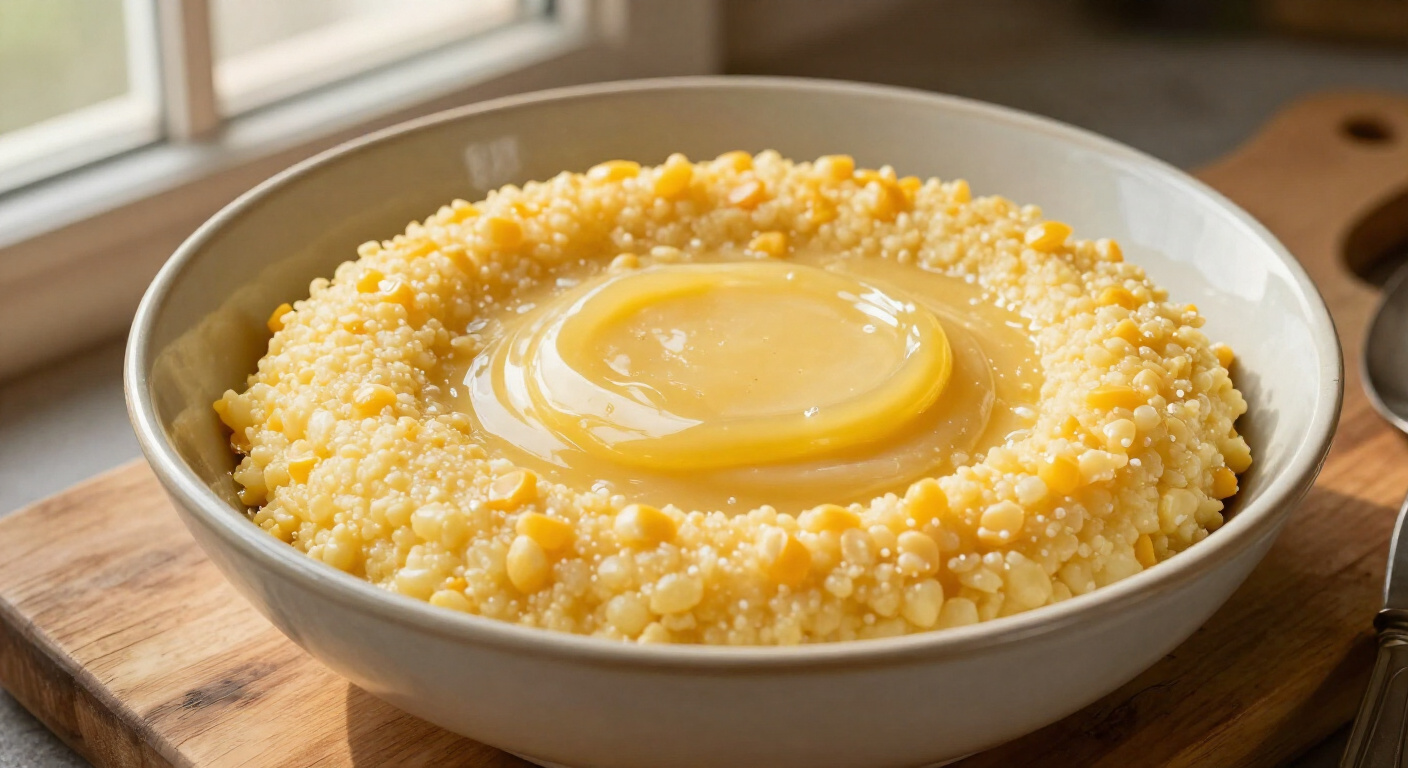
What is polenta made from? Just Italian cornmeal, water and salt, stirred 45 minutes into a velvety, gluten free side. See how it's done.
Wondering what is polenta made from? It's humble Italian cornmeal, slowly stirred for 45 minutes into a velvety, sunny-gold mound that's naturally gluten free and perfect beside any Sunday roast.
Cold salted water, a slow stream of cornmeal, and a switch from whisk to wooden spoon give you lump-free, creamy polenta. A short rest off the heat makes it extra silky.
Ingredients You'll Need
Cold Water: Plain cold tap water is the quiet backbone of creamy polenta. Starting cold, the way my mother did, keeps the pot calm and the cornmeal smooth. If your tap water tastes off, use filtered water. Skip broth here so the sweet corn flavor shines through.
Coarse-Ground Yellow Cornmeal (Labeled Polenta): Here's the answer to what polenta is made from. Polenta is cornmeal, just a coarse, golden Italian cornmeal ground for slow simmering into something velvety. It's naturally gluten free, but check for a certified gluten-free label if cross-contact matters to you. No polenta bag? Plain coarse-ground yellow cornmeal works beautifully. Fine cornmeal cooks faster but turns pastier.
Kosher Salt: Kosher salt wakes up the corn's gentle sweetness. Without it, polenta tastes flat and dusty. Its big, flaky crystals dissolve evenly in the water and are easy to pinch. Fine sea salt works too. Use about two-thirds as much, since it's saltier by the spoonful.


How to Make It (Step by Step)
This all happens in one heavy saucepan: boil salted water, whisk in the cornmeal slowly, then stir with a wooden spoon until it's thick, velvety and sunny gold.
Even if you've never touched a bag of polenta before, you'll have a creamy, glossy bowl on the first try.

- Pour 6 cups cold water into a heavy-bottomed saucepan and stir in 1½ teaspoons kosher salt. Bring it up over medium-high heat until big, rolling bubbles break across the surface, 8-10 minutes at 212°F / 100°C. Cold water first is how my mother did it. It keeps things calm.

- Lower the heat to medium. Pour in 1½ cups coarse-ground yellow cornmeal in a slow, thin stream, whisking the whole time. Keep going until every grain is suspended and no lumps remain, 2-3 minutes at 200°F / 93°C. Slow and steady wins here, sweetheart.

- Keep whisking at a gentle bubble until the mixture thickens and your whisk leaves soft trails behind it, 3-5 minutes at 195°F / 90°C. You'll feel it pull against your wrist. That's the cornmeal waking up.

- Switch to a wooden spoon and turn the heat down to low. Let it plop and simmer, scraping the bottom and corners every 5 minutes. Cook until the grains swell and the color deepens to sunny gold, about 15 minutes at 190°F / 88°C.

- Keep stirring every few minutes until it turns thick, creamy and velvety. It's ready when it pulls cleanly away from the sides and the grains taste tender, not gritty, 10-15 minutes more at 190°F / 88°C.

- Slide the pan off the heat and let it rest uncovered. Wait until the surface settles smooth and the polenta firms just slightly, about 5 minutes at 170°F / 77°C. This little pause makes it extra silky.

- Spoon the polenta into a warm serving bowl. Serve right away while it slumps into a soft, glossy mound, within 1-2 minutes at 165°F / 74°C. Sunday dinner, saved.

Leftovers keep four days and reheat creamy with a splash of warm water; stone-ground grits work in a pinch. Make it a day ahead, and soak the pot right away.
Serving size: 1 portion · Calories: 220 · Total Fat: 1.5g · Saturated Fat: 0.2g · Carbs: 47g · Fiber: 4g · Sugar: 0.5g · Protein: 5g · Sodium: 590mg
Tips and Tricks
- Equipment: Use a heavy-bottomed saucepan and a wooden spoon: A thick base spreads heat gently, so the cornmeal won't scorch at the bottom. Start with a whisk to keep lumps away. Then switch to a sturdy wooden spoon once it thickens. It reaches the corners a whisk can't.

- Temperature precision: Hold a lazy simmer around 190°F / 88°C: Once the cornmeal is in, keep the heat low. You want a slow, sleepy plop, not a rolling boil. Too hot, and it spits like a little volcano. The grains also seize up before they can swell and soften.
- Common mistake: Dumping the cornmeal in all at once: It's tempting to tip the whole cup in and be done. Don't, sweetheart. The grains clump into dry little pockets that never cook through. Pour in a slow, thin stream and whisk the entire time.
- Flavour upgrade: Finish with butter and Parmesan: This is optional, but oh, it's lovely. Stir in a pat of butter and a handful of grated Parmesan right before serving. It turns rich, nutty and glossy. Mama saved this trick for birthdays.
- Texture tip: Taste the grains and let it rest: Don't trust the clock alone. Spoon up a little and taste it. The grains should feel tender, never sandy or gritty. Then let the pan rest uncovered for five minutes. It settles into a silky, velvety mound.

Frequently Asked Questions
Is polenta gluten free, and is it safe for someone with celiac disease?
Yes, polenta is naturally gluten free because it's only corn, water and salt, but some mills also process wheat. For celiac guests, use 1½ cups of certified gluten-free coarse yellow cornmeal, such as Bob's Red Mill Gluten Free Polenta, and keep the same 6 cups water.
Can I freeze leftover polenta, and how do I make it creamy again?
Yes, press cooled polenta into a lidded container and freeze it up to 3 months, then thaw overnight in the fridge. Warm it in a saucepan over low heat with a splash of broth or milk, whisking 5-8 minutes until it's soft and glossy again.
Why does my polenta turn lumpy, and how do I smooth it out?
Lumps form when cornmeal hits the water too fast. Pour it in a slow, thin stream while whisking, and if clumps still appear, whisk hard off the heat for a minute until every grain is suspended and the surface looks smooth.
What to Serve With This
- Garlicky Sautéed Collard Greens: Their slightly bitter, garlicky bite cuts right through the sweet, velvety corn, just like Mama's Sunday greens did.
- Balsamic Roasted Cherry Tomatoes: Jammy, bursting tomatoes bring a bright, tangy pop that wakes up every mellow golden spoonful.
- Lemony Arugula Salad: Peppery leaves and a sharp lemon dressing add crisp freshness beside the warm, creamy mound.
- Crispy Roasted Brussels Sprouts: Their crunchy, caramelized edges give you a satisfying contrast against all that silky softness.

What Is Polenta Made From? Creamy Italian Cornmeal Polenta
Side Dish / Italian
- Prep
- 5 min
- Cook
- 40 min
- Total
- 45 min
- Servings
- 4
- Calories
- 220 kcal
Ingredients
- 6 cups cold water
- 1½ cups coarse-ground yellow cornmeal (labeled polenta), stirred to break up any clumps
- 1½ teaspoons kosher salt
Instructions
- Pour 6 cups cold water into a heavy-bottomed saucepan and stir in 1½ teaspoons kosher salt. Bring it up over medium-high heat until big, rolling bubbles break across the surface, 8-10 minutes at 212°F / 100°C. Cold water first is how my mother did it. It keeps things calm.
- Lower the heat to medium. Pour in 1½ cups coarse-ground yellow cornmeal in a slow, thin stream, whisking the whole time. Keep going until every grain is suspended and no lumps remain, 2-3 minutes at 200°F / 93°C. Slow and steady wins here, sweetheart.
- Keep whisking at a gentle bubble until the mixture thickens and your whisk leaves soft trails behind it, 3-5 minutes at 195°F / 90°C. You'll feel it pull against your wrist. That's the cornmeal waking up.
- Switch to a wooden spoon and turn the heat down to low. Let it plop and simmer, scraping the bottom and corners every 5 minutes. Cook until the grains swell and the color deepens to sunny gold, about 15 minutes at 190°F / 88°C.
- Keep stirring every few minutes until it turns thick, creamy and velvety. It's ready when it pulls cleanly away from the sides and the grains taste tender, not gritty, 10-15 minutes more at 190°F / 88°C.
- Slide the pan off the heat and let it rest uncovered. Wait until the surface settles smooth and the polenta firms just slightly, about 5 minutes at 170°F / 77°C. This little pause makes it extra silky.
- Spoon the polenta into a warm serving bowl. Serve right away while it slumps into a soft, glossy mound, within 1-2 minutes at 165°F / 74°C. Sunday dinner, saved.
Share this article
About the author

Lorraine Beckett
Lorraine's mother never wrote anything down, and when she passed, thirty years of Sunday dinners almost went with her. Lorraine spent a whole winter crying over a pot of greens until she got them right. Every side dish here is a piece of that woman, saved before it could be lost.